Market Signals #9: Amazon Enters ChatGPT, Meta Launches an AI Shopper, and Gen Z Turns Out to Be More Loyal Than Anyone Expected

.png)
New ad inventory opened inside AI. A decade-long antitrust case reached its verdict. Brand loyalty data came in that inverts a widely held assumption about younger consumers. And two of the biggest platforms made moves that shorten the distance between a consumer's intent and a completed purchase. Five stories, all pointing in the same direction.
Here’s what changed, and what we think it means for paid media.
Amazon Pilots Ad Services Inside ChatGPT, Opening a New Conversational Inventory Channel
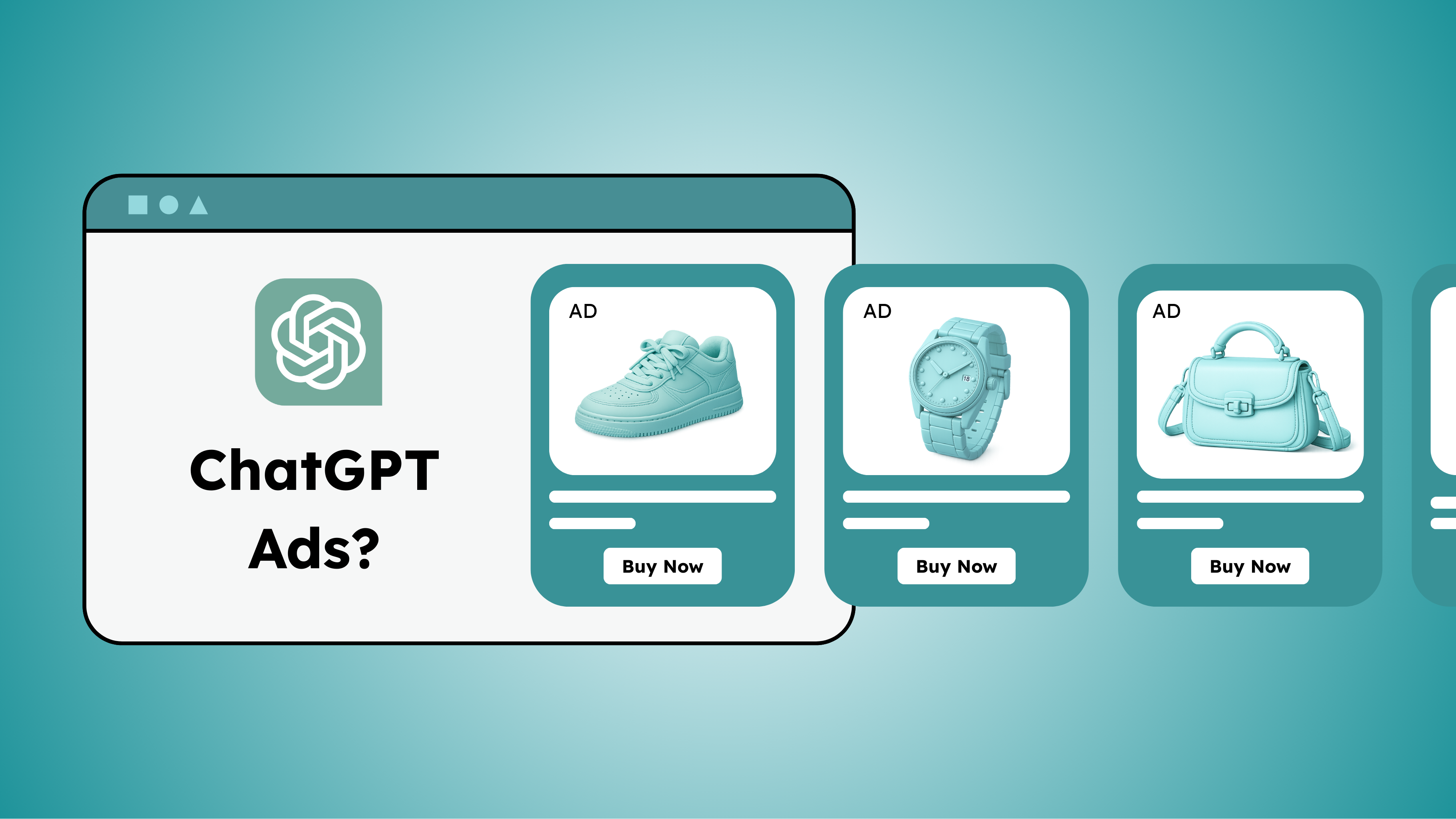
Amazon advertisers can now extend campaigns into ChatGPT through a new partnership between the two companies. ChatGPT Ads will be available via Amazon DSP as a managed service, offered on both CPC and CPM bases, with Delta Vacations among the first brands piloting the integration in the US. OpenAI retains full control over ad delivery decisions. Ads surface as text and image units beneath organic ChatGPT responses with clearly marked sponsored labels. Amazon is also offering product feed ads that auto-generate assets from product catalogs.
Our take
The commercial logic here is straightforward for both parties. Amazon brings scale, shopping data, and thousands of existing DSP advertisers. OpenAI gets an established demand pipeline at a critical moment ahead of its anticipated IPO, where ad revenue will feature in its growth narrative. For advertisers, the more interesting question is what conversational ad placement actually delivers. ChatGPT Ads launched in February and recently crossed a $1 billion annualized revenue run rate, but some early marketers have reported underwhelming performance. The managed service model, where Amazon sets up and optimizes campaigns, reduces the barrier to entry. Whether the contextual richness of a ChatGPT conversation translates to measurably better commercial outcomes is the test that the next several months of pilot data will answer.
Google Avoids a Forced Breakup but Must Open Its Ad Tech Tools to Rivals
A federal judge ruled on September 2 that Google will not be forced to sell AdX, its ad exchange, rejecting the Justice Department's structural remedy following last year's finding that Google illegally monopolized two ad tech markets. Judge Leonie Brinkema instead accepted undisclosed behavioral remedies, reported by Bloomberg to involve Google opening its ad tech tools to rival platforms. The ruling follows an earlier 2026 decision where Google was similarly spared from selling Chrome after being found to hold a search monopoly. The specific behavioral changes were issued under seal and will be made public later this month.
Our take
This is the second consecutive antitrust ruling where courts have found Google violated the law and then declined to impose the structural remedy that critics argued was the only meaningful fix. For the ad tech ecosystem, the short-term operational picture does not change dramatically. AdX stays where it is. DV360, Google Ads, and the publisher ad server stack remain integrated. The longer-term implication depends entirely on what the behavioral remedies turn out to require when the redacted ruling is published. If they mandate meaningful interoperability between Google's tools and competing buy-side and sell-side platforms, the programmatic landscape could shift in ways that benefit independent DSPs and SSPs. If the remedies are narrower, the market structure stays largely intact. For advertisers, the ruling is less immediately relevant than the continued regulatory pressure it signals: the conversation about platform concentration in ad tech is not concluded, it has simply moved to a slower timeline.
Gen Z Brand Loyalty Has Grown 16 Points Since 2020, Rewriting Where Acquisition Budgets Should Focus
The share of 18 to 24 year olds describing themselves as 'very loyal' to their favorite brands grew from 30% to 46% between 2020 and 2025, a 16-point gain, according to data cited by eMarketer. The same sentiment grew from 29% to 42% among 25 to 29 year olds and from 30% to 44% among 30 to 34 year olds. Among consumers aged 45 to 54 and 55 to 64, brand loyalty stayed flat at 34% and 32% respectively over the same period. Gen Z's digital buyer adoption rate is forecast to reach 92% by 2029.
Our take
The loyalty data inverts a narrative that has shaped acquisition strategy for years. Younger consumers were typically characterized as less loyal, more price-sensitive, and harder to retain, which pushed brands toward older cohorts for loyalty investment. The CivicScience five-year dataset suggests the opposite dynamic is now playing out. Gen Z and younger millennials are developing stronger brand preferences, while older cohorts have reached a loyalty ceiling. The implication for paid media is concrete: if loyalty growth is concentrated in the 18 to 34 segment, campaigns aimed at acquiring and retaining that audience have a longer commercial runway than the same spend against an older cohort where loyalty is already plateaued. The caveat eMarketer flags is real: reaching younger consumers still requires format, messaging, and channel strategies built for how they actually engage, not repurposed from approaches designed for older audiences.
Google Expands AI Overviews Into Full-State Responses, Pushing Organic Results Further Down the Page
Google is now dynamically expanding AI Overviews into their full state in response to certain search queries, removing the 'show more' button and loading the follow-up 'ask anything' conversational box immediately beneath the response. The expanded format provides a more detailed answer than the standard AI Overview snippet and facilitates a more direct transition into AI Mode. Core organic search results move further down the page as a result.
Our take
Each incremental expansion of AI Overviews on the search results page represents a compounding shift in how click-through traffic distributes across the page. The expanded format is not simply a larger snippet. The 'ask anything' conversational box loading automatically beneath it creates a pathway into AI Mode that makes the interaction feel conclusive rather than a stepping stone to an organic result.
For SEO-dependent traffic strategies, the signal is consistent with what has been visible for several months: zero-click search is increasing as a share of impressions, particularly for informational queries where AI Overviews can answer the question without requiring a click. The paid search implication may be more favorable: ads maintain their position above the AI Overview, which means sponsored placements benefit from the downward pressure on organic results. For brands that have relied heavily on SEO for top-of-funnel traffic, the update reinforces the case for investing in content that earns AI Overview citation alongside, rather than instead of, their paid search presence.
Meta Launches Muse, a Personal AI Agent That Can Shop on Behalf of Users
Meta launched Muse, a standalone personal AI agent and browser that can manage shopping, appointments, and fitness tracking on behalf of users. Muse connects to users' other apps including Meta's own platforms, Gmail, and Shopify, and can execute tasks autonomously. Powered by Muse Spark, the agent learns from user conversations and can proactively suggest actions, including offering to purchase an item of clothing based on a saved Instagram post. Only 4.7% of US consumers currently list Meta AI as their preferred AI tool, placing it behind ChatGPT, Gemini, Copilot, Siri, and Claude.
Our take
Muse is Meta's most direct move yet into agentic commerce, the model where an AI acts on a consumer's behalf rather than simply presenting options. The integration with Shopify and the ability to trigger a purchase from a saved Instagram post represents a significant shortening of the path from social discovery to transaction. For advertisers, the commercial potential is substantial if adoption follows, but the current preference data is a realistic check on timeline. Meta AI sits well behind ChatGPT and Gemini in consumer preference, and Muse is entering a market where OpenAI, Google, and Amazon are all building toward similar agentic capabilities simultaneously.
The more immediate implication for performance marketers is less about Muse itself and more about what it signals: the major platforms are converging on a model where AI mediates the purchase decision rather than just influencing it. Brands whose product and catalog data is well-structured for AI consumption, with clean feeds, clear product descriptions, and accurate pricing, will be better positioned when that mediation layer matures.
What These Signals Mean for Performance Marketing
The throughline across this issue is that AI is moving from a tool advertisers use to a layer that mediates between advertisers and consumers. Amazon putting ads inside ChatGPT conversations, Google expanding AI Overviews to keep users inside its answer environment, and Meta building an agent that can purchase on a user's behalf all point toward a near future where the consumer decision journey runs increasingly through AI-managed interfaces rather than open web browsing.
The brand loyalty data adds a useful counterpoint. Gen Z is building stronger preferences faster than any prior generation at the same age. The brands that establish themselves clearly within that cohort now are the ones most likely to benefit from those durable preferences as the purchase interface shifts toward AI-mediated models. Visibility in the new AI surfaces and credibility with younger consumers are not separate strategic priorities. They are the same one.
Key Takeaways
· Amazon advertisers can now run campaigns inside ChatGPT via Amazon DSP, opening conversational AI as a new managed-service ad channel for the first time.
· A federal judge ruled Google does not have to sell AdX but must open its ad tech tools to rivals, with the specific behavioural remedies still under seal.
· The share of 18 to 24 year olds describing themselves as very loyal to their favourite brands grew 16 points between 2020 and 2025, while loyalty among consumers over 45 stayed flat.
· Google is dynamically expanding AI Overviews into full-state responses for certain queries, removing the show more button and pushing organic results further down the page.
· Meta launched Muse, a personal AI agent that can autonomously shop, book, and manage tasks on behalf of users, including triggering purchases from saved Instagram posts.
---
Unsure how these updates could impact your campaigns? Reach out to us.
Relevant Insights:
· Article: AI Ad Spending Will Double and More by 2030. What It Means for Search and Chatbot Advertising
· Article: Market Signals #8: How AI Is Changing Search Targeting, Ads, and Brand Visibility
· Article: ChatGPT Ads: A Strategic Preparation Guide for Digital Media Leaders
About Crealytics
Crealytics is an award-winning full-funnel digital marketing agency fueling the profitable growth of over 100 well-known B2C and B2B businesses, including ASOS, The Hut Group, Staples and Urban Outfitters. A global company with an inclusive team of 100+ international employees, we operate from our hubs in Berlin, New York, Chicago, London, and Mumbai.
EXPERT INSIGHTS