Market Signals #3: The Battle for Attention Moves Upstream

Over the past two weeks, a common theme emerged across the advertising industry: the battle for attention is moving upstream.
AI advertising is developing differently than many expected. Instagram is creating new ways to monetize engagement. The FIFA World Cup is evolving into a multi-platform advertising ecosystem. And WhatsApp is becoming a battleground for AI-powered discovery.
Together, these developments point to a broader shift in where consumer decisions are being shaped and where advertisers need to be present.
Here’s what changed, and what it means for performance marketing.
1. Most AI Advertising Won’t Happen Inside Chatbots
According to EMARKETER’s latest US AI Advertising Forecast, AI advertising revenue is expected to grow from more than $32 billion in 2026 to over $68 billion by 2030.
However, the forecast challenges one of the industry’s biggest assumptions: that chatbot advertising will become the dominant AI ad format.
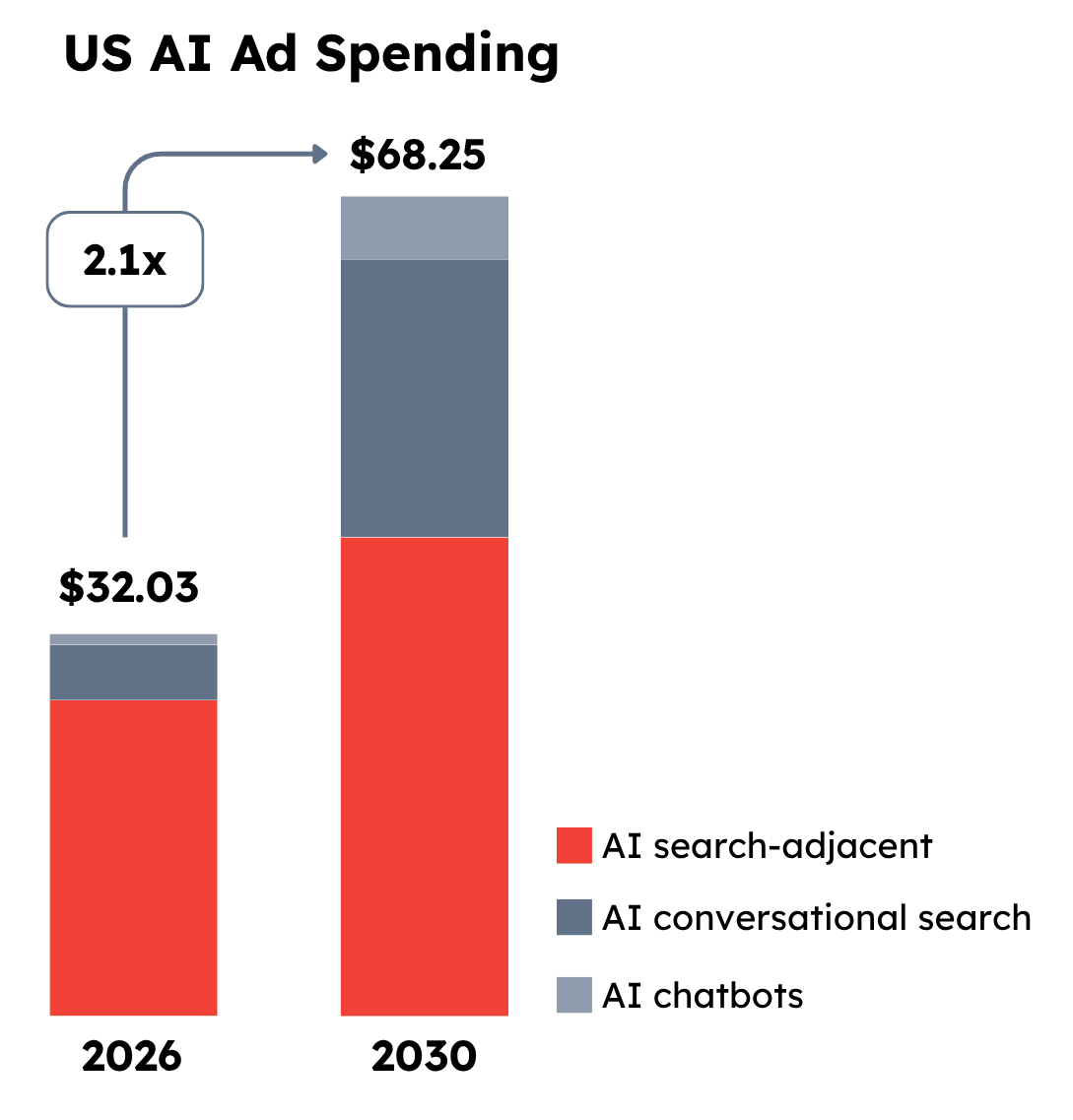
EMARKETER predicts that more than 80% of AI advertising this year will appear alongside AI-generated content, such as ads shown next to Google’s AI Overviews, rather than inside chatbot conversations. Even by 2030, advertising attached to AI-powered search experiences is expected to remain significantly larger than advertising embedded within chatbots themselves.
The firm estimates chatbot advertising will generate less than $1 billion in US ad revenue this year and just over $5 billion by 2030.
Our take
The forecast is a useful reminder that AI advertising and chatbot advertising are not the same thing. Much of the discussion has focused on platforms like ChatGPT, but AI-powered discovery is already becoming part of existing search experiences. For advertisers, the more immediate shift may be how AI changes search behavior rather than the emergence of entirely new ad channels.
For a deeper breakdown of how chatbot ads may actually fit into the media mix, read the Q&A with Amy Tran, our Senior Director of Growth: ChatGPT Ads for DTC Brands and Retailers: Cutting Through the Hype.
2. Instagram Expands 5-Second Countdown Ads After Reels
Instagram has expanded its post-Reel ad format to all global advertisers through Campaign Manager.
The format inserts a five-second, non-skippable countdown ad after a user finishes watching a Reel. Once the countdown ends, users can choose to continue, skip, or move on to other content.
The rollout comes as Reels continues to become one of Meta’s most valuable advertising surfaces. According to Sensor Tower, Reels accounted for 46% of all time spent on Instagram and more than half of all Instagram ads during Q4 2025.
By placing ads after content consumption rather than interrupting it, Meta is creating new inventory while attempting to preserve the user experience that makes short-form video so engaging.
Our take
Meta is continuing to look for ways to monetize attention without interrupting the user experience. Unlike traditional short-form ads that compete with scrolling, this format appears after a user has already engaged with content. That could make it an interesting placement for advertisers, particularly if creative is adapted to make the most of a very short viewing window.
3. The FIFA World Cup Is Becoming a Multi-Platform Advertising Event
As the FIFA World Cup approaches, advertisers are increasingly treating it as more than a television event.
Broadcasters, streaming platforms, creators, social networks, and brands are all competing for a share of the tournament’s attention. While major sporting events have traditionally concentrated audiences around a handful of broadcast partners, today’s fan experience spans YouTube, TikTok, podcasts, influencer content, streaming services, and second-screen engagement.
For marketers, the World Cup remains one of the few truly global attention moments. But unlike previous tournaments, much of that attention will be distributed across multiple platforms rather than concentrated in a single viewing experience.
Our take
The World Cup remains one of the biggest attention events in the world, but that attention is becoming more distributed. Fans now move between live broadcasts, creators, highlights, social platforms, and second-screen experiences throughout the day. For brands, this makes it increasingly important to think beyond a single media placement and consider the broader fan journey.
4. The EU Orders Meta to Reopen WhatsApp to Rival AI Assistants
European regulators ordered Meta to restore access for competing AI assistants on WhatsApp while an antitrust investigation continues.
The decision centers on whether Meta can use WhatsApp’s scale and reach to give its own AI products an unfair distribution advantage over rivals.
While the case focuses on competition and regulation, it also highlights the growing importance of messaging platforms in the future of digital discovery.
Our take
The story here goes beyond regulation. As AI assistants become more integrated into everyday platforms, access to users becomes increasingly important. If messaging apps play a larger role in discovery, advertisers may eventually need to think about visibility in these environments alongside traditional search and social channels.
What These Upstream Attention Shifts Mean for Performance Marketing
Across all four updates, the direction is consistent.
More consumer decisions are being shaped before a search takes place. Whether through creators, AI assistants, major live events, or new ad formats, platforms are competing to influence discovery earlier in the customer journey.
That makes understanding demand creation just as important as demand capture. The platforms are fighting for attention earlier. Performance marketers will need to do the same.
---
Unsure how these shifts should influence your media planning? Reach out to us.
Relevant Insights:
· Article: Ad Receptivity Is Rising But Attention Is Falling: What CMOs Need to Know
· Article: Will LLMs Replace Search Engines? How Brands Can Stay Visible in the AI Age
· Article: ChatGPT Ads: A Strategic Preparation Guide for Digital Media Leaders
About Crealytics
Crealytics is an award-winning full-funnel digital marketing agency fueling the profitable growth of over 100 well-known B2C and B2B businesses, including ASOS, The Hut Group, Staples and Urban Outfitters. A global company with an inclusive team of 100+ international employees, we operate from our hubs in Berlin, New York, Chicago, London, and Mumbai.
EXPERT INSIGHTS