How to Measure the Impact of Brand Building on Paid Media Performance

Every quarter, leadership teams review the same performance metrics: cost per acquisition, return on ad spend, conversion rate, and revenue generated from paid media.
These metrics are important. They help determine whether media budgets are being allocated efficiently and whether campaigns are delivering commercial results.
What they rarely show, however, is how much of that performance was influenced by brand investment.
Brand building and paid media are often measured separately. One sits under awareness, consideration, or long-term growth initiatives. The other is evaluated against immediate commercial outcomes. Yet the two are deeply connected.
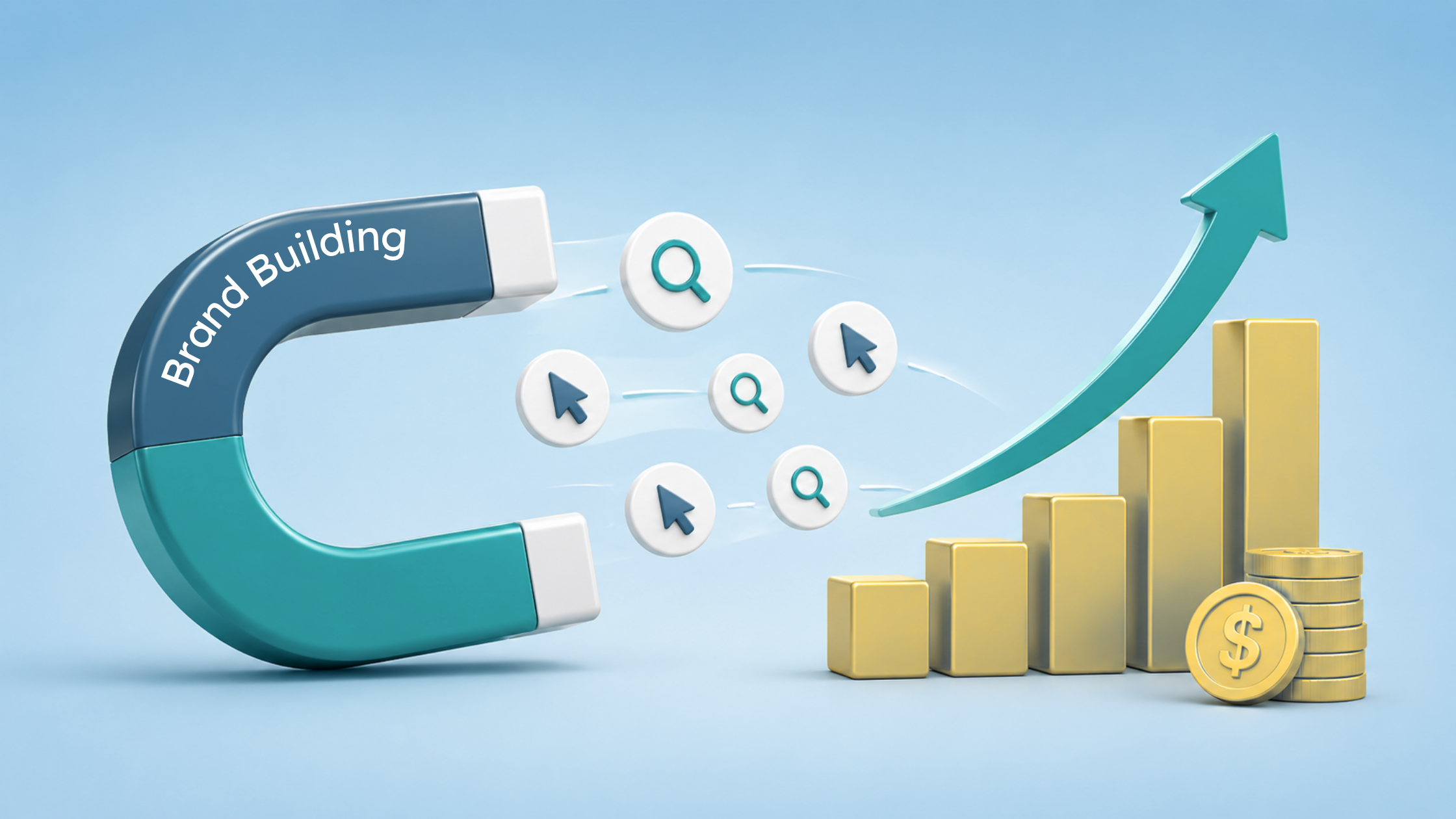
Brand investment shapes how audiences respond to ads long before they click. It influences recognition, trust, engagement, and purchase intent before a campaign enters an auction. The challenge is that most attribution systems struggle to make that influence visible.
For leadership teams, the question is how to identify where brand contribution appears inside paid media reporting.
Here are four metrics that often reveal when brand investment is improving paid media efficiency.
1. Is Branded Search Volume Growing Faster Than Paid Media Spend?
Branded search volume refers to the number of people actively searching for a company name, product name, or brand-specific term.
When branded search volume grows without a corresponding increase in paid media investment, it often indicates that brand awareness and mental availability are strengthening.
This matters because branded traffic behaves differently from category traffic. Users searching directly for a brand have already completed part of their decision-making process before they see an ad. As a result, branded keywords typically generate higher conversion rates while maintaining lower cost-per-clicks than generic category terms.
The impact extends beyond branded campaigns themselves. As more consumers search for a brand directly, a larger share of demand enters the funnel with existing familiarity and intent. Paid media then operates against a warmer audience base, improving overall efficiency.
What to Measure
Track branded search volume, branded impression share, and share of search on a rolling 12-month basis.
If branded demand continues to grow while acquisition costs remain stable or improve, brand investment is likely contributing to paid media performance.
Read our article What Brand Signals Now Drive Paid Media Efficiency for a deeper look at the metrics that connect brand strength with campaign performance.
2. Why Are Quality Scores Higher Than Category Benchmarks?
Google's Quality Score evaluates the relevance and expected performance of search ads using factors such as expected click-through rate, ad relevance, and landing page experience.
Many organizations assume strong Quality Scores are solely the result of campaign optimization. In reality, brand familiarity often plays a significant role.
When users recognize a brand name within search results, they are more likely to click the ad. Higher click-through rates strengthen Quality Score signals, which can improve Ad Rank and reduce cost-per-click.
This creates a compounding effect. Brand investment improves familiarity. Familiarity increases engagement. Engagement improves Quality Score. Better Quality Scores lower acquisition costs.
The original brand activity may have occurred months earlier through video, content, social, retail media, or offline channels, yet its impact appears inside search performance metrics.
What to Measure
Monitor Quality Score distribution across core keywords and compare CPC performance against category benchmarks.
Consistently strong Quality Scores combined with below-average CPCs often indicate that brand familiarity is supporting paid media efficiency.
3. Why Do Some Retargeting Audiences Convert Better Than Others?
Retargeting is often viewed as a performance tactic. However, audience quality frequently determines its success more than campaign execution alone.
Two visitors may enter the same retargeting audience, yet their likelihood of converting can differ significantly based on how they experienced the brand during their first interaction.
A visitor arriving through a branded search, direct visit, thought leadership article, or trusted recommendation often carries stronger purchase intent than a visitor arriving through a broad awareness campaign or generic display placement.
When retargeting campaigns generate strong conversion rates, part of that performance frequently originates from brand equity created earlier in the customer journey.
Research from Google and WARC has shown that brand and performance campaigns often reinforce one another, creating stronger overall returns than either approach can generate independently.
What to Measure
Segment retargeting audiences based on their first source of interaction.
Compare conversion rates between audiences that initially arrived through branded search, direct traffic, organic content, and broader acquisition channels.
Meaningful differences often reveal the commercial value of brand investment.
Relevant Insight: Finding the Right Shopping Time Window for Retargeting
4. Can Paid Media Performance Stay Strong When Creative Testing Slows?
Creative testing remains an important driver of paid media optimization. However, there are periods when organizations reduce testing volume, simplify targeting strategies, or consolidate campaign structures.
In some cases, performance remains stable despite fewer optimization efforts.
When this happens, brand strength may be absorbing part of the workload that campaign mechanics previously carried.
Recognizable brands reduce uncertainty. Consumers require less persuasion, process information more quickly, and respond more confidently when they already understand who the advertiser is.
Research from Nielsen and Google has repeatedly demonstrated that stronger brand recall improves advertising effectiveness across channels. Familiarity increases responsiveness long before a user evaluates a specific offer or call to action.
As a result, strong brands can often sustain performance even when creative complexity is reduced.
What to Measure
Review periods where creative testing volume decreased or campaign structures became simpler.
If performance remained stable or improved, brand equity may be contributing more to outcomes than attribution reports currently reflect.
Relevant Insight: The AI Creative Playbook: A Strategic Guide to Scalable Performance Content
How Should CMOs Measure the Impact of Brand on Paid Media Performance?
The four indicators above share a common characteristic: they reveal brand influence indirectly.
Most attribution systems focus on the final interaction before conversion. They assign value to the click, but not necessarily to the familiarity, trust, or recognition that made the click more likely. This creates a measurement gap.
To close that gap, leadership teams should evaluate brand and performance metrics together rather than in isolation.
Branded search volume, share of search, direct traffic growth, brand recall, repeat visitation, and paid media efficiency metrics should be reviewed as part of the same growth framework.
When brand strength increases, paid media performance often improves shortly afterward. The relationship may not appear in a single dashboard, but it consistently appears in the underlying metrics.
Paid media efficiency is not solely an outcome of campaign execution. It is also influenced by the strength of the brand that audiences encounter before the campaign begins.
Organizations that measure both together gain a clearer understanding of what is actually driving growth and where future performance improvements are most likely to come from.
---
Need help measuring the true impact of brand investment on paid media performance? Reach out to us!
Relevant Insights:
· Article: How to Craft a Brand Narrative That Drives Emotional Connection and Customer Loyalty
· Article: Why the Multiplier Effect Still Matters in 2026: Brand, Performance, and AI-Driven Growth
· Article: Why Emotions Can Matter More Than Keywords: Rethinking Paid Search Through a Human Lens
About Crealytics
Crealytics is an award-winning full-funnel digital marketing agency fueling the profitable growth of over 100 well-known B2C and B2B businesses, including ASOS, The Hut Group, Staples and Urban Outfitters. A global company with an inclusive team of 100+ international employees, we operate from our hubs in Berlin, New York, Chicago, London, and Mumbai.
EXPERT INSIGHTS